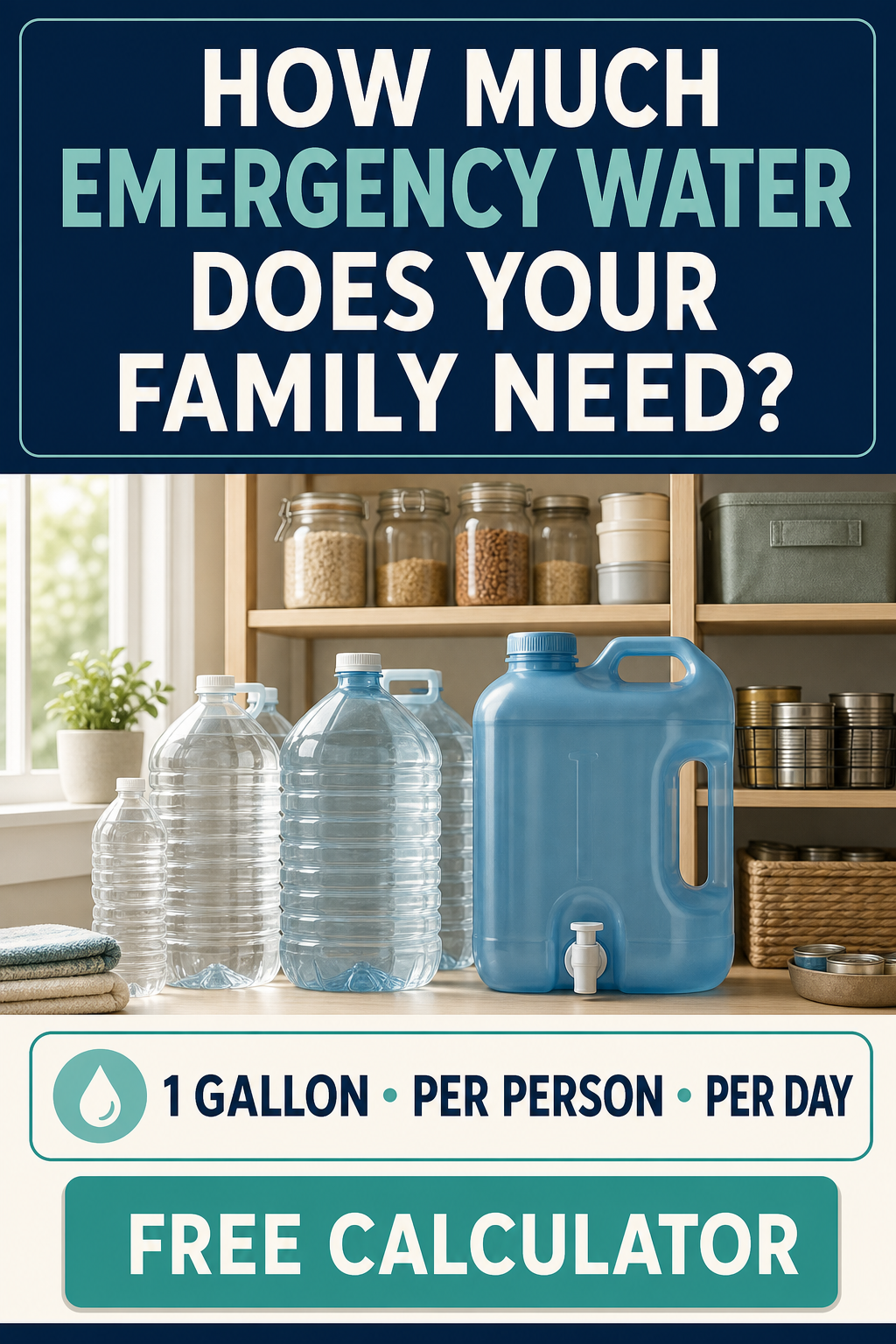
The CDC recommends storing at least one gallon of water per person per day for three days. That water covers drinking, cooking, brushing teeth, and other basic uses. If space and budget allow, the CDC suggests trying to build toward a two-week supply.
The basic formula
People × days × one gallon
For a family of four, twelve gallons is the three-day starting point—not necessarily the final amount your household should store.
Three-day water amounts by household size
These examples apply the CDC’s one-gallon-per-person-per-day minimum for three days. They do not include extra water for pets or special circumstances.
When should you store more?
Consider adding water beyond the basic calculation for:
- Pets. Include every animal in your household plan.
- Pregnancy or illness. The CDC specifically advises considering additional water.
- Hot climates. Higher temperatures can increase water needs.
- Longer disruptions. A three-day supply is the starting point; a two-week supply provides a wider buffer when practical.
If two weeks feels unrealistic, store the three-day minimum first. Add another container when your space and budget allow.
Do not overlook the weight
Water weighs about 8.3 pounds per gallon. A twelve-gallon family supply weighs roughly 100 pounds before accounting for the containers. Divide the total among manageable containers rather than relying on one container that is difficult to move or pour.
Choose and store containers safely
Unopened commercially bottled water is the safest and most reliable emergency option according to the CDC. When filling your own containers, use food-grade water-storage containers with tight closures and, when possible, narrow openings. Never reuse a container that held toxic chemicals such as bleach or pesticides.
Label home-filled containers as drinking water, include the storage date, keep them cool and away from sunlight and chemicals, and replace the water every six months.
Official sources
This guide summarizes public emergency-water recommendations. During an actual emergency, follow instructions from your local water utility and public-health authorities.